
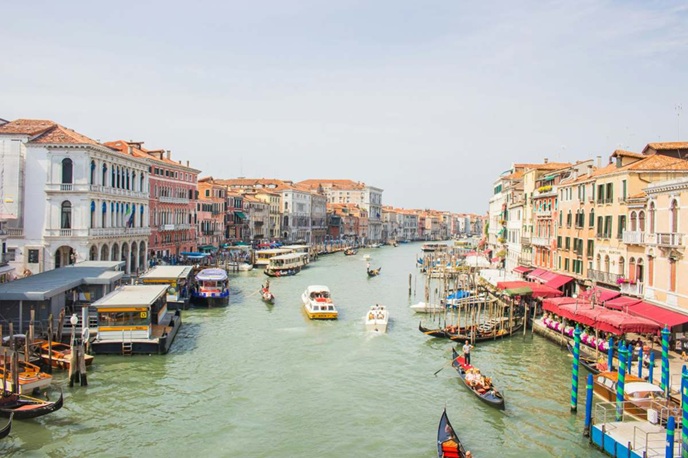
Experiencing Venice “in style” has very little to do with excess. In fact, the city tends to push back against anything too loud, too fast, too obvious. Style here is mostly about restraint: knowing when to stop walking, when to sit, when not to cross another bridge just because you can.
Venice rewards travelers who slow down enough to notice how the city actually works. The elegance isn’t staged. It emerges when you align yourself with its pace rather than trying to impose your own.
Learn the City by Repeating It
One of the most effective ways to experience Venice well is repetition. Walking the same route at different times of day changes everything. A calle at 8 a.m. feels practical and local; the same street at dusk becomes quiet and suspended.
Instead of treating Venice as a checklist, let a small area become familiar. Cross the same bridge every morning. Stop at the same bar. Sit on the same fondamenta in the evening. Style, in Venice, comes from recognition — when places stop feeling decorative and start feeling usable.
Choose Water Over Land When Possible
Venice is built on water, but many visitors experience it almost entirely on foot. Walking is unavoidable, but some of the city’s most revealing moments happen from the water.
A vaporetto ride early in the morning, when commuters and deliveries share the boat, tells you more about daily Venetian life than any gondola ride. You see how distances work, how neighborhoods connect, how the city functions before it performs.
This is not about luxury transport. It’s about choosing the perspective that makes the city legible.
Eat for the Hour, Not the Reputation
Dining well in Venice requires adjusting expectations. Restaurants tied to reputations, views, or menus translated into five languages rarely offer the most satisfying experiences.
Style here means eating according to time and place. Cicchetti before lunch. A simple pasta when you’re tired rather than when it’s “recommended.” Wine chosen because it fits the moment, not because it’s famous.
When meals follow the rhythm of the day instead of interrupting it, Venice feels less theatrical and more grounded.
Let the Crowds Define When, Not Where
Avoiding crowds in Venice is unrealistic. Learning how to move around them is far more useful. Early mornings and late evenings change the city dramatically, even in the busiest areas.
Instead of chasing “hidden Venice,” focus on timing. Piazza San Marco at dawn is a different place than at midday. The same goes for major crossings, markets, and vaporetto lines. Style, in this sense, is temporal rather than spatial.
You don’t need secret locations. You need the right hours.
Comfort Shapes Perception More Than You Think
After a few days in Venice, something subtle happens: your experience of the city starts to depend heavily on how rested you are. Walking distances are real. Standing is frequent. Noise travels easily over water.
This is where practical comfort quietly shapes style. Not as indulgence, but as continuity. Being able to return, pause, and reset without effort changes how generously you engage with the city.
It’s often at this stage that travelers begin to appreciate choices that support rhythm rather than interrupt it — whether that’s proximity, quiet, or simply a place that feels removed from constant transit. In that sense, the idea of a luxury hotel in Venice isn’t about opulence, but about preserving energy so the city remains enjoyable rather than overwhelming.
Dress for Movement, Not Display
Venice is not a city for rigid outfits. Bridges, humidity, and uneven surfaces demand flexibility. The most stylish people here dress for movement: comfortable shoes, light layers, clothes that adapt.
This isn’t about blending in or standing out. It’s about not letting what you wear dictate what you can do. When movement is easy, exploration becomes more fluid — and the city feels less demanding.
Accept That You Won’t “Finish” Venice
One of the most liberating realizations is that Venice cannot be completed. There will always be another sestiere you barely touched, another church you passed without entering, another canal you never saw.
Experiencing Venice in style means letting go of completion. You don’t need to see everything to feel satisfied. In fact, satisfaction often comes from leaving things undone — with the sense that the city remains intact, not consumed.
Evenings Are Where the City Levels Out
As day-trippers leave, Venice exhales. Shops close. Streets empty. Sounds change. This is when the city feels most balanced — not empty, but proportionate.
Evenings are for walking without purpose, sitting without plans, noticing reflections rather than monuments. Nothing dramatic happens, and that’s precisely the point.
Style, Ultimately, Is Alignment
Venice doesn’t reward ambition. It rewards alignment. When your pace matches the city’s, when your expectations soften, when comfort supports curiosity rather than replacing it, the experience becomes quietly refined.
Experiencing Venice in style isn’t about doing more or staying somewhere impressive. It’s about removing friction — physical, mental, logistical — so the city can be experienced on its own terms.
And when that happens, Venice doesn’t need to impress. It simply works.
